How to split a week in Mallorca
Mallorca is genuinely big: it's over 80 km from Palma to Cala Ratjada, and the roads through the Serra de Tramuntana can't be driven quickly. With seven days ahead, the most efficient approach is to organize the trip by area — Palma, the Tramuntana, the east, the south and the north — rather than crossing from one end to the other every morning. Renting a car is almost essential if you want to move around freely, though for the Sóller day it makes more sense to leave the car parked and take the train.
Day 1 – Palma: old town and Castell de Bellver
The first day is best spent in the city to settle in. The Catedral de Mallorca (La Seu), the Palau de l'Almudaina and the maze of streets in the Gothic Quarter are easy to explore on foot in a morning; in the afternoon it's worth heading up to Castell de Bellver, the circular castle overlooking the bay, with views over the whole city and the port.
 Guided Walking Tour of Palma Old Town including Cathedral VisitCheck availability →
Day 2 – The Sóller train and the Serra de Tramuntana
The Serra de Tramuntana is a Unesco World Heritage Site and the day you can't skip. The historic wooden train leaves Palma, crosses the mountains through tunnels and valleys of centuries-old olive trees, and arrives in Sóller; from there, the tram runs down to Port de Sóller in fifteen minutes. If you'd rather walk than just watch through the window, the mountains have short hiking routes between villages such as Esporles, Banyalbufar or Deià, with almond trees, dry-stone terraces and views over the Mediterranean.
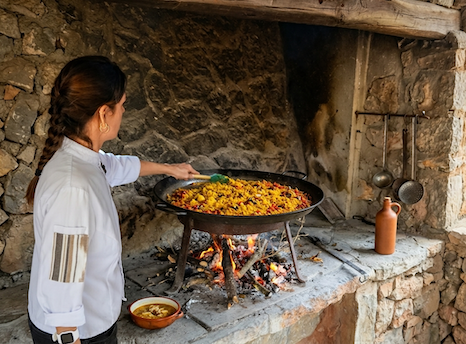 Serra de Tramuntana: Hiking experience & wood-fired paella in EsporlesCheck availability →
Day 3 – Porto Cristo and the Cuevas del Drach
The east of the island is organized around Porto Cristo and its caves, one of Mallorca's great classics for over a century. The Cuevas del Drach hide the underground lake Martel, one of the largest underground lakes in the world, with a short classical music concert performed from a boat included in the visit. The village of Porto Cristo, with its seafront promenade and quiet cove, is a good place to eat afterwards.
 Caves of Drach & Porto Cristo: A coastal discoveryCheck availability →
Day 4 – Es Trenc and the south
Es Trenc is the beach everyone shows in photos of Mallorca: fine white sand and turquoise water with almost no development behind it, unusual for such a touristy island. It lies within Campos, between Santanyí and Colònia de Sant Jordi, and driving there gets tricky in high season because parking is limited and paid; arriving early or taking a boat from a nearby port avoids the midday queues. Use the area to also visit Santanyí or the smaller coves in the south, such as Es Caló des Marmols.
 Catamaran cruise to Es Trenc BeachCheck availability →
Day 5 – Alcúdia, Formentor and the north
The north brings a change of scenery: the bay of Alcúdia is wide with long beaches, and excursions leave from the port towards Cap de Formentor, with its viewpoints over the cliffs and the beach of the same name, one of the most photogenic on the island and reachable only by boat, on foot or by limited road transport in high season. Alcúdia's walled old town deserves an unhurried stroll before or after the beach.
Day 6 – Eastern coves: Cala Ratjada and Cala d'Or
The stretch between Cala Ratjada and Cala d'Or holds some of Mallorca's most secluded coves, with pine forests that reach almost to the sand. It's a good day to move between the small coves — Cala Figuera, Portopetro, Cala Mondragó — by catamaran rather than driving from one to the next, since many have narrow access roads and scarce parking. If you're travelling with children or enjoy diving, this area also has sea caves and clear waters good for snorkelling.
Day 7 – Bay of Palma and farewell
On the last day, with no rush to cover distance, the Bay of Palma is a good way to close the trip with a sunset boat ride, dolphin watching, or simply an afternoon at the beach near the airport. It's also the moment to finish off any shopping or go back to the old town if anything was left unfinished on the first day.
Practical tips for planning the week
- Rent a car for every day except the Sóller day, when the train replaces the car.
- Book the Cuevas del Drach and the Sóller train in advance in high season: sessions sell out.
- Start beach days (Es Trenc, Formentor) early; parking fills up before midday in summer.
- Pair each area with its boat excursion: it's the easiest way to see several coves without relying on narrow roads.
- Leave one day with no fixed plans in case the weather forces a change of area.