Es Trenc, the Caribbean beach of the south
Es Trenc is the beach everyone pictures when they think of Mallorca: almost 2 km of white sand and turquoise water, with barely any building behind it because it forms part of the Es Trenc-Salobrar de Campos natural park. It is 10.8 km from Campos and 5.1 km from Colònia de Sant Jordi, with signposted access from both towns. Behind the sand stretches a dune system and a wetland where more than 170 bird species have been recorded, one of the best-preserved natural spaces on the island.
 Catamaran cruise to Es Trenc BeachCheck availability →
Cala Mondragó, the protected gem of the southeast
Inside the Mondragó Natural Park, near Santanyí, two of Mallorca's most photographed coves lie hidden: Cala Mondragó (Ses Fonts de n'Alís) and S'Amarador, separated by a short walk through pine woods. The water is clear and shallow, ideal for families, and the whole setting — low dunes, gentle cliffs, coastal path — is protected as a natural park.
Cala d'Or, Cala Figuera and Portopetro: the southeast by boat
Further north of Mondragó, the coastline of Cala d'Or and Santanyí links a succession of narrow coves between pine woods and whitewashed houses — Cala Figuera still keeps its old fishing harbour almost intact — with marinas from which catamarans and dolphin-watching excursions set off daily towards Portopetro and Cala Ferrera. It is the area with the most boat departures on the whole island, ideal for seeing several coves in a single morning without relying on a car.
Unspoilt coves of Llevant: Varques, Magraner and Virgili
Between Porto Cristo and Cales de Mallorca, the Manacor coast holds an undeveloped stretch where Cala Varques, Cala Magraner and Cala Virgili follow one another: fine sand, pine trees down to the shoreline and no beach bars. There is no car access down to the shore — only parking by the road and a footpath through a private estate with authorised passage — which keeps visitor numbers low even in August. It is the stretch of coast best explored from the sea, skirting cliffs and grottoes that cannot be seen from land.
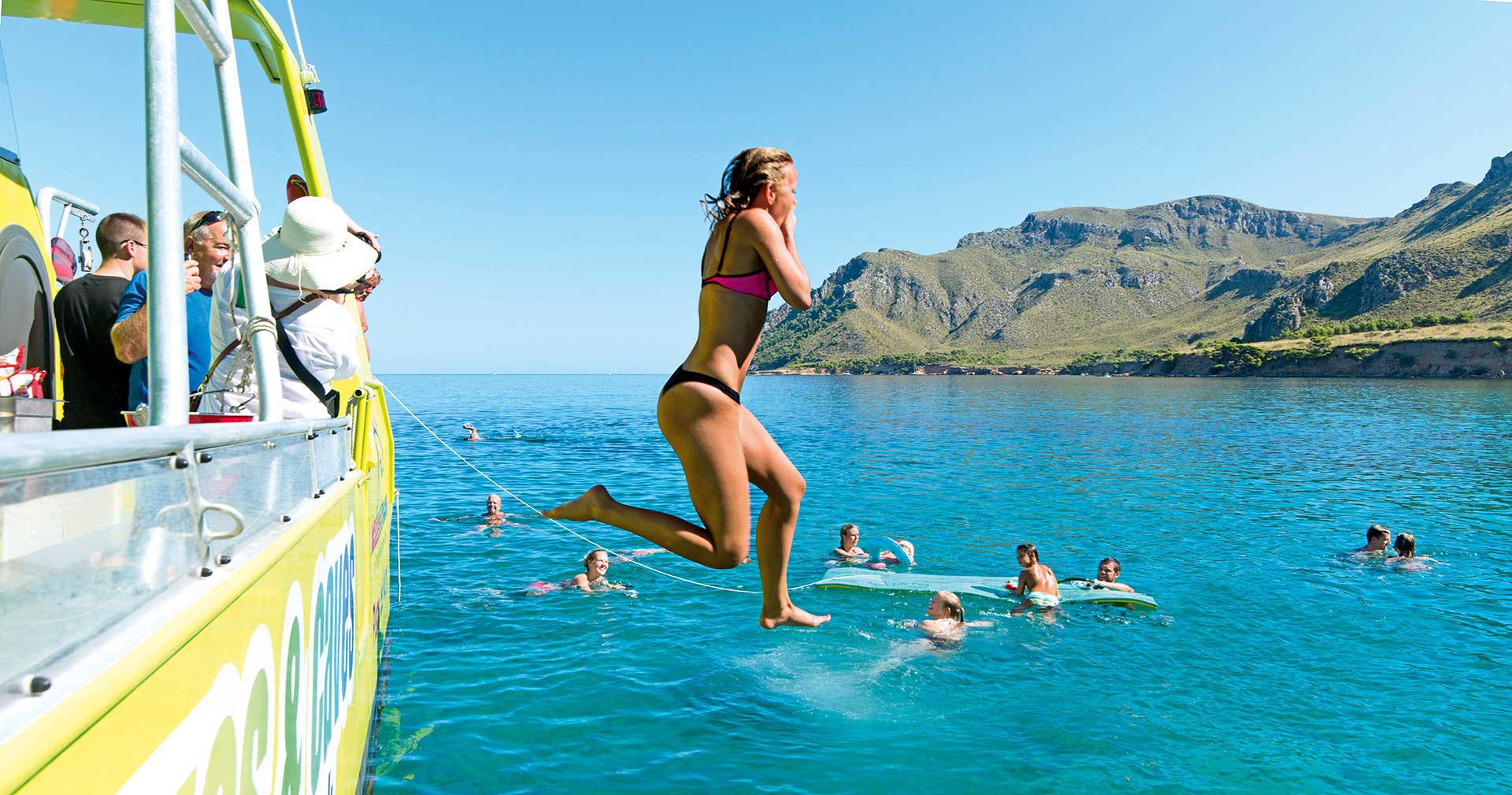 Speedboat Adventure: Coves, Caves & Llevant Natural ParkCheck availability →
The north: Formentor and the Bay of Alcúdia
Formentor beach (Cala Pi de la Posada), at the end of the island's most photogenic road, combines pine woods, fine sand and waters sheltered by the cape. Every summer, between 1 June and 30 September, private traffic is restricted for much of the day — only residents and people with reduced mobility — so in high season it is worth using the public transport service set up to reach it. Further on in the Bay of Alcúdia, the beaches are much more accessible and expansive, perfect for combining with catamaran excursions along the north coast.
Cabrera National Park, the day trip
The Cabrera archipelago, off the south coast, is the only maritime-terrestrial national park in the Balearics: unspoilt seabeds, undeveloped beaches and biodiversity found nowhere else on the island. As a protected area, sailing there independently requires prior authorisation from the park administration; the usual way to visit is an organised excursion that already includes those permits.
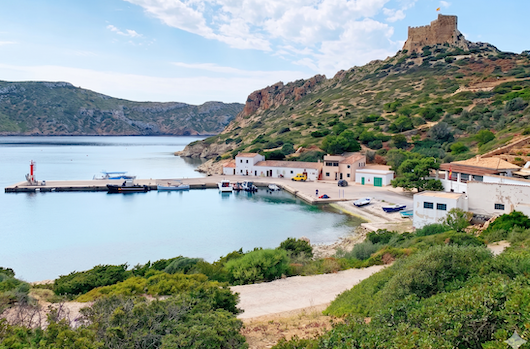 Visit to Cabrera Island by speedboat from Colonia Sant JordiCheck availability →
Cuevas del Drach, the perfect complement in Porto Cristo
A few minutes from the coves of Manacor, the Cuevas del Drach are the island's most popular inland visit: more than a kilometre of galleries and Lake Martel, one of the largest underground lakes in Europe, with a short classical music concert and a boat crossing included in the visit.
 Caves of Drach & Porto Cristo: A coastal discoveryCheck availability →
The Sóller train, the scenic route to the western coves
To combine beach with scenery, the Sóller train crosses the Serra de Tramuntana from Palma on a century-old wood-and-brass journey, stopping in Sóller and connecting by tram to Port de Sóller, where there is a small pebble cove perfect for a swim at the end of the route.
Practical tips for choosing your cove
- Families with young children: Cala Mondragó, S'Amarador or the Bay of Alcúdia, for their shallow water and nearby facilities.
- Looking for peace and quiet: coves accessible only on foot such as Cala Varques, Magraner or Virgili, or a boat excursion that skirts them without walking.
- A full day without a car: catamarans or speedboats cover several coves in a row and avoid the parking problem in high season.
- Combining beach and protected nature: Es Trenc-Salobrar, Mondragó and Cabrera are the three ecologically most valuable spaces on the Mallorcan coast.
- Arriving early: in July and August, the car parks at the most famous coves (Es Trenc, Formentor, Cala Varques) fill up before 10:00.