Where to go snorkeling and diving in Mallorca: a quick guide by area
Mallorca packs several distinct ecosystems for getting into the water into a small area: islets with a marine reserve in the southwest, sandy coves with rocky bottoms in the east, and an almost untouched national park off the south coast. You don't need to pick a single spot for the whole week: depending on the wind and the area where you're staying, some beaches have better visibility than others, and that changes from one day to the next.
As a general guide: if you dive or want to try a course, Santa Ponsa Bay (the Illes Malgrats Marine Reserve) is the area with the most dive centers on the island. If you only have a mask and snorkel, the white-sand coves with rocks at the edges —Cala Vella, Cala Varques, Portals Vells— give good results without needing a boat. And if you want the clearest water in the Balearics, you have to sail out to Cabrera.
Illes Malgrats Marine Reserve, in Santa Ponsa Bay
The two Malgrats islets, off Santa Ponsa, are the benchmark for diving in Mallorca: rocky bottoms with groupers, barracudas, moray eels and nudibranchs, with several dive sites suitable for both first-timers and experienced divers. Being just 5-10 minutes by boat from the area's dive centers, it's also where most organized snorkeling excursions set out daily.
 Snorkeling Tour in the Malgrats Islands Marine ReserveCheck availability →
 Try scuba diving in Santa Ponsa (from Illetes and Cala Vinyes)Check availability →
El Toro, Portals Vells and Sa Dragonera: the southwestern tip
Following the coast south, the island of El Toro is the other major marine reserve in the area: less crowded than Malgrats, with rocky walls and a good presence of pelagic species. Right next door, the caves and small coves of Portals Vells are a snorkeling classic, with easy entry from the sand and sheltered waters almost all year round. And at the western tip, off Sant Elm, the Sa Dragonera Natural Park adds another stretch of unspoiled coastline where the marine life is noticeable as soon as you put your head under.
Bay of Palma: easy snorkeling at Cala Vella and El Arenal
For those staying in the Palma or El Arenal area who don't want to travel far, Cala Vella is the most convenient option: calm waters, shallow depth near the shore and rocks on the sides where fish tend to gather. It's often combined with a catamaran or boat trip from El Arenal, with a swim and snorkel stop included, ideal if you're traveling with children or trying it for the first time.
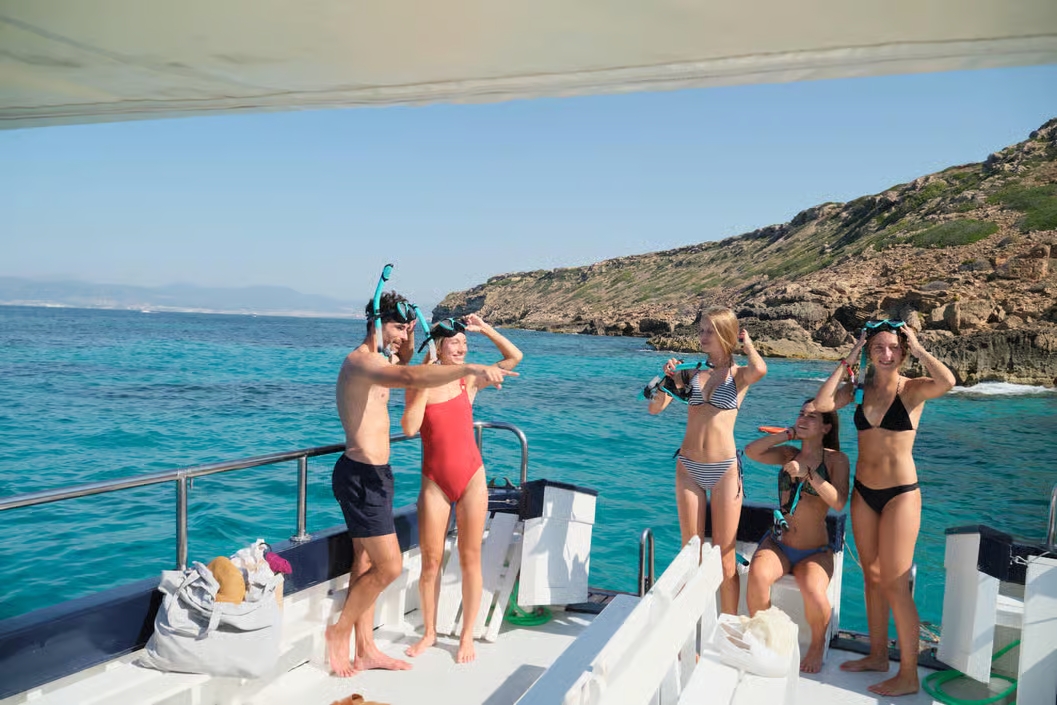 2-hour Snorkeling Tour at Cala Vella from El ArenalCheck availability →
Cabrera National Park: the clearest water in the Balearics
Cabrera is a different story altogether: a protected, undeveloped archipelago south of Mallorca, with posidonia meadows that keep a clarity hard to find anywhere else on the island. It can only be reached by boat (an organized excursion or your own vessel with a permit), and the reward is swimming over a seabed that has barely changed in decades.
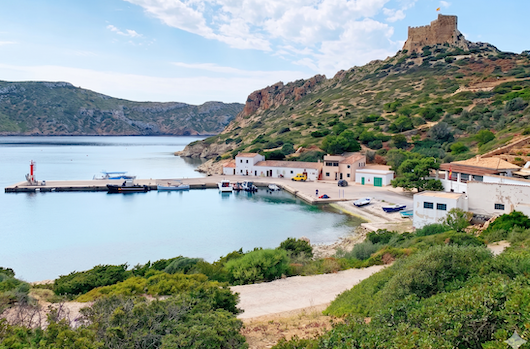 Visit to Cabrera Island by speedboat from Colonia Sant JordiCheck availability →
East Mallorca: Cala Varques, Porto Cristo and the Parc de Llevant
On the east coast, Cala Varques remains one of the best spots on the island for snorkeling: white sand, rocks on both sides and seabeds with good marine life variety. There's no car access: you get there on foot via a roughly 20-minute path from the free parking area on the Ma-4014 road (between Porto Cristo and Cales de Mallorca), with room for around 30-40 vehicles. Further north, the protected coastline of the Parc Natural de Llevant, between Cala Ratjada and Artà, offers less-crowded coves with the same kind of rocky, life-rich seabed, popular with the catamaran and speedboat excursions departing from Cala Ratjada and Portocolom.
Practical tips before getting in the water
- Best visibility: calm sea and light wind; after several days of tramontana or llebeig wind the water usually gets murkier, especially in exposed coves.
- If you go on your own to a marine reserve, respect the buoys and marked zones: they're areas with more fish and wildlife precisely because they're protected.
- No experience or certification is needed for a first dive: the instructor stays with you the whole time and the equipment is included.
- At coves without a lifeguard (Cala Varques, Portals Vells, Cabrera itself) bring a signal buoy if you swim far from the shore.
- Boat excursions with a snorkeling stop usually include basic equipment (mask and snorkel), but it's worth confirming when booking if you need a wetsuit.
With that, you have the map: Malgrats and El Toro for proper diving inside a marine reserve, Cala Vella for an easy dip from the Bay of Palma, Cabrera for the clearest water on the island, and Cala Varques or the Parc de Llevant if you'd rather get there on your own and discover a quiet cove. All excursions including snorkeling or diving can be booked directly, with equipment and a guide included.