Why the Serra de Tramuntana is a hiker's paradise
The Serra de Tramuntana stretches almost 90 kilometers along Mallorca's northwest coast and was declared a World Heritage Site by Unesco for its cultural landscape, built from terraces, dry-stone walls and paths that have supported olive groves and terraced fields for centuries. Walking here isn't just exercise: it means crossing stone villages like Deià, Fornalutx or Valldemossa, peeking into hidden coves and reaching viewpoints over the Mediterranean that can't be seen from any road. The good news is you don't need to be an expert hiker to enjoy it: there are short, flat routes for walking with children and multi-day treks for those looking for a real challenge.
Easy routes and family walks
If you're looking to walk without suffering, the Camí Vell de Lluc a Pollença is a great introduction to the Tramuntana. It's officially classified as low difficulty despite its 17.8 kilometers, because it follows a well-signposted historic route without major elevation changes, with an estimated duration of 4 hours and 30 minutes. It starts at the Santuario de Lluc, crosses the Binifaldó estate and ends at the Vall d'en Marc, within the municipality of Pollença. If you're traveling with children or prefer something shorter, you can just do the first stretch to Binifaldó and walk back the way you came. For an even more relaxed plan, combine the walk with a stop at the Jardines de Alfabia, between Bunyola and Sóller: a flat stroll among ponds, orchards and a manor house, perfect for resting your legs or for anyone who prefers a gentler contact with the Tramuntana landscape.
 Alfabia Gardens: House, Garden, and OrchardCheck availability →
Moderate level: the Barranc de Biniaraix
The Barranc de Biniaraix is probably the most photographed route in the Tramuntana and one of the best for those who already have some experience. It's 5.6 kilometers and about 2 hours and a half of walking (not counting stops), with an elevation gain of around 450 meters and moderate difficulty. The starting point is in the village of Biniaraix, a hamlet of Sóller about 40 minutes by car from Palma, also reachable on bus line 232, which connects Port de Sóller with Fornalutx. The route climbs the Camí Vell between dry-stone terraces —recognized by Unesco— up to the Torrent de l'Ofre, and anyone with energy to spare can extend the hike to the summit of the Puig de l'Ofre, with views of the Puig Major and the Cúber reservoir. If you prefer a guided route of similar difficulty that ends with a reward, in Esporles there's an option that combines hiking through the Tramuntana with a paella cooked over a wood fire at the end of the route.
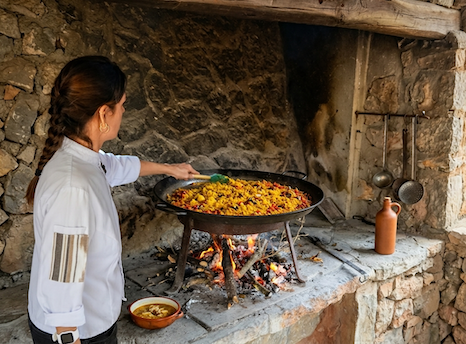 Serra de Tramuntana: Hiking experience & wood-fired paella in EsporlesCheck availability →
Tramuntana classics: the S'Arxiduc route
The Camí de S'Arxiduc, in Valldemossa, is one of the island's most historic routes: it was laid out by order of Archduke Luis Salvador of Austria in the 19th century and is now part of the GR-221. The circular variant from the village adds up to 15 kilometers with a cumulative elevation gain of 777 meters of ascent and roughly the same in descent, reaching a maximum altitude of 944 meters; the full route, including stops, takes around 6 hours. It leaves from Calle de ses Oliveres, climbs to the Ses Puntes and Sa Talaia Vella viewpoints, passes by the Refugio del Archiduque and crowns the Puig Es Caragolí before completing the loop. It's a moderately difficult route, demanding more for its distance and elevation gain than for technical difficulty, and one of the best ways to understand why this mountain range captivated the archduke more than a century ago.
For expert hikers: Massanella and the full GR-221
Anyone looking to put their legs and lungs to the test has two clear options. The first is the Puig de Massanella, Mallorca's second-highest peak at 1,364 meters: the classic route from the Lluc monastery covers 11.88 kilometers, with an elevation gain of 1,156 meters and about 8 hours and 20 minutes of walking, making it a tough, demanding hike recommended only for those in good physical shape, with technical footwear and favorable weather forecasts. The second is the full trek along the GR-221, the Ruta de Pedra en Sec, which crosses the entire mountain range from end to end between Andratx and Pollença over 8 stages spread across 9 days. Along the way there are 8 operating refuges managed by the Consell de Mallorca —Ses Fontanelles, Galatzó, Esporles, Deià, Muleta, Tossals Verds, Son Amer and Pollença—, offering bunk beds, breakfast, lunch, dinner and picnic options available by reservation.
Mallorca's summit you can't set foot on
The island's highest point, the Puig Major, reaches 1,445 meters, but you won't be able to climb to its summit: it has housed a military radar installation of the Ejército del Aire since the 1950s, and the Ministerio de Defensa has ruled out any public access, even with special permission. The geodesic marker was moved to a nearby peak, the Torrella, at 1,415 meters, which is now the highest freely accessible point in Mallorca and a good substitute for anyone who wants to claim they've almost reached the top of the island.
If you'd rather see the Tramuntana without walking so much
Not everyone wants to spend the day carrying a backpack, and the Tramuntana can also be enjoyed at a different pace. There are guided vehicle tours that cover the mountain range's most spectacular spots without the need to walk long distances, ideal if you're traveling with small children or if you'd rather save your legs for another day.
 Premium Tour: Tramuntana Mountains Hidden MarvelsCheck availability →
Another different way to get around the interior is on horseback: in the Randa valley, in the center of the island, there are guided routes that let you explore mountain and countryside landscapes without needing to go on foot, a very popular option among families and groups with different fitness levels.
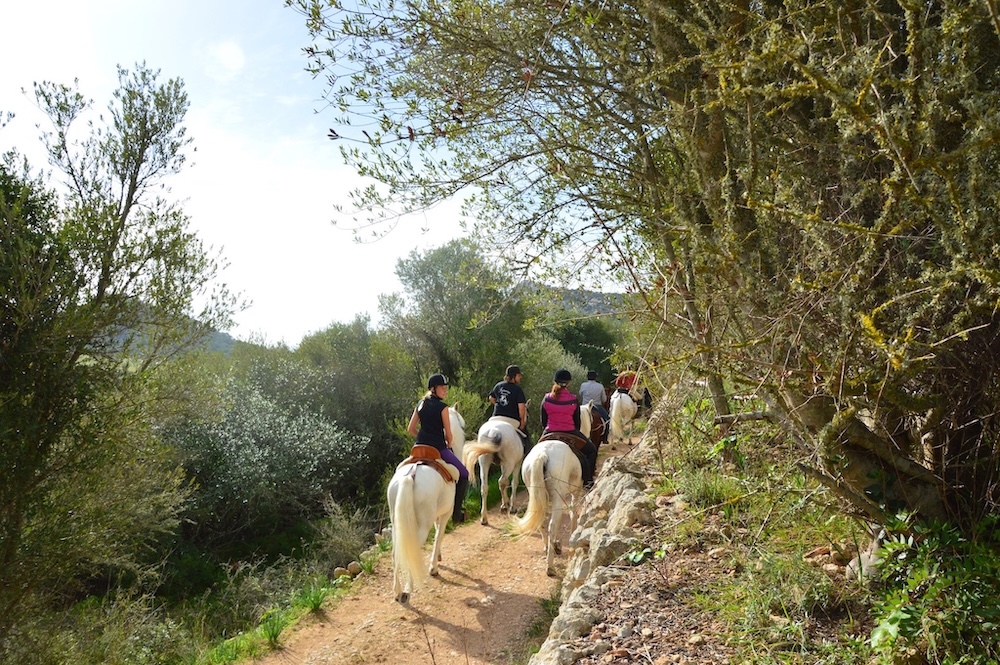 Horseback Riding in Mallorca: Andalusian Horses & Randa ValleyCheck availability →
Practical tips before heading out to hike
- Always carry plenty of water: in the Tramuntana there are few reliable fountains in summer, and temperatures can be high even in shaded areas.
- Wear mountain footwear with good grip: much of the paths are loose stone or historic cobblestone, slippery if it has rained.
- Avoid the midday hours in summer and start early, especially on long routes like the Camí Vell de Lluc a Pollença or S'Arxiduc.
- Spring (March-May) and autumn (September-November) are the best times: mild temperatures and fewer people on the most popular trails.
- Download the GPS track before setting out: mobile coverage is patchy in much of the mountain range.
- Respect the private estates that some GR-221 stretches cross: close the gates and don't stray from the marked path.