Where to see dolphins in Mallorca
Mallorca isn't just beaches and coves: its waters are part of one of the cetacean migration routes in the western Mediterranean, which means seeing dolphins in the wild here depends far more on picking the right departure point and time of day than on luck. The island has excursions specifically dedicated to dolphin watching — not generic cruises that merely mention the possibility — spread across several stretches of coast, which multiplies your options depending on where you're staying.
- Bahía de Palma: the most convenient option if you're staying in the capital or the south of the island, with short, frequent departures.
- Southwest coast (Santa Ponsa, Puerto Portals, Camp de Mar): the area with the most operators dedicated exclusively to dolphin watching.
- Bahía de Alcúdia (north): sunrise excursions, when the sea tends to be calmer.
- Cala Ratjada (northeast): early departures out into open water, on a natural migration route for several species.
- Canal de Cabrera - Portopetro - Cala d'Or (southeast/south): waters bordering the Cabrera National Park, one of the best-preserved marine areas in the Mediterranean.
.jpg) Palma Bay Dolphin WatchingCheck availability →
Palma Bay Dolphin WatchingCheck availability →The southwest coast, the area with the most dedicated departures
Between Santa Ponsa and Port d'Andratx the seabed drops off quickly, so speedboats and catamarans don't need to venture far from the coast to reach areas where dolphins feed and travel. This is the stretch with the most operators specialising in dolphin watching on the whole island, with morning and evening departures, which are often combined with a swimming or snorkelling stop in the waters of the Malgrats Islands Marine Reserve.
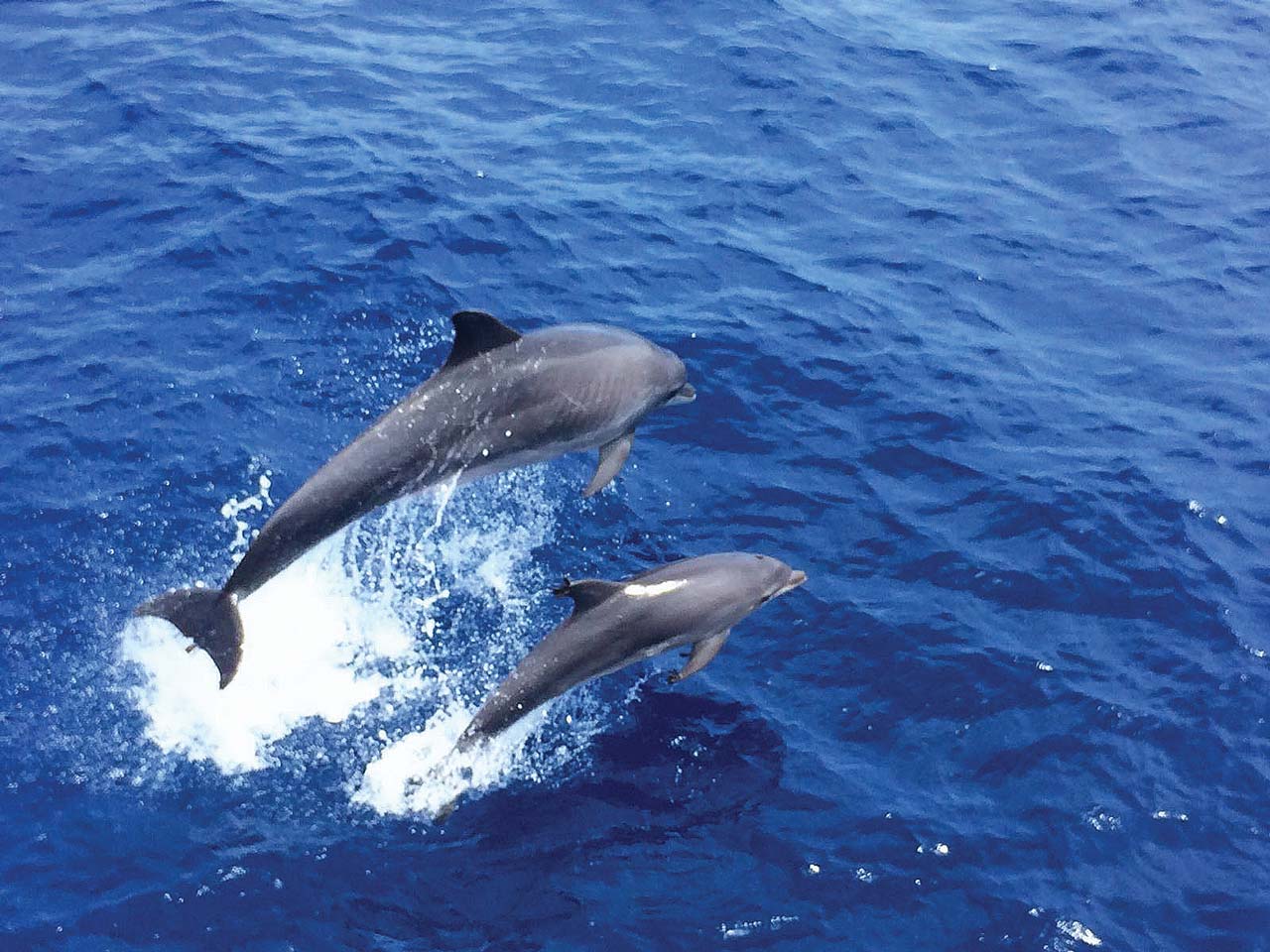 Dolphin Watching catamaran cruise in the Southwest Coast of MallorcaCheck availability →
Sunrises with dolphins: Alcúdia and Cala Ratjada
In the north and northeast of the island, the formula that works best is heading out before sunrise. At that hour the sea tends to be calmer, there's less boat traffic, and dolphins are more active near the surface as they search for food. Besides the sighting itself, the added reward is watching the sun rise from the sea, which makes these outings one of the highest-rated experiences among those who have already tried several areas of the island.
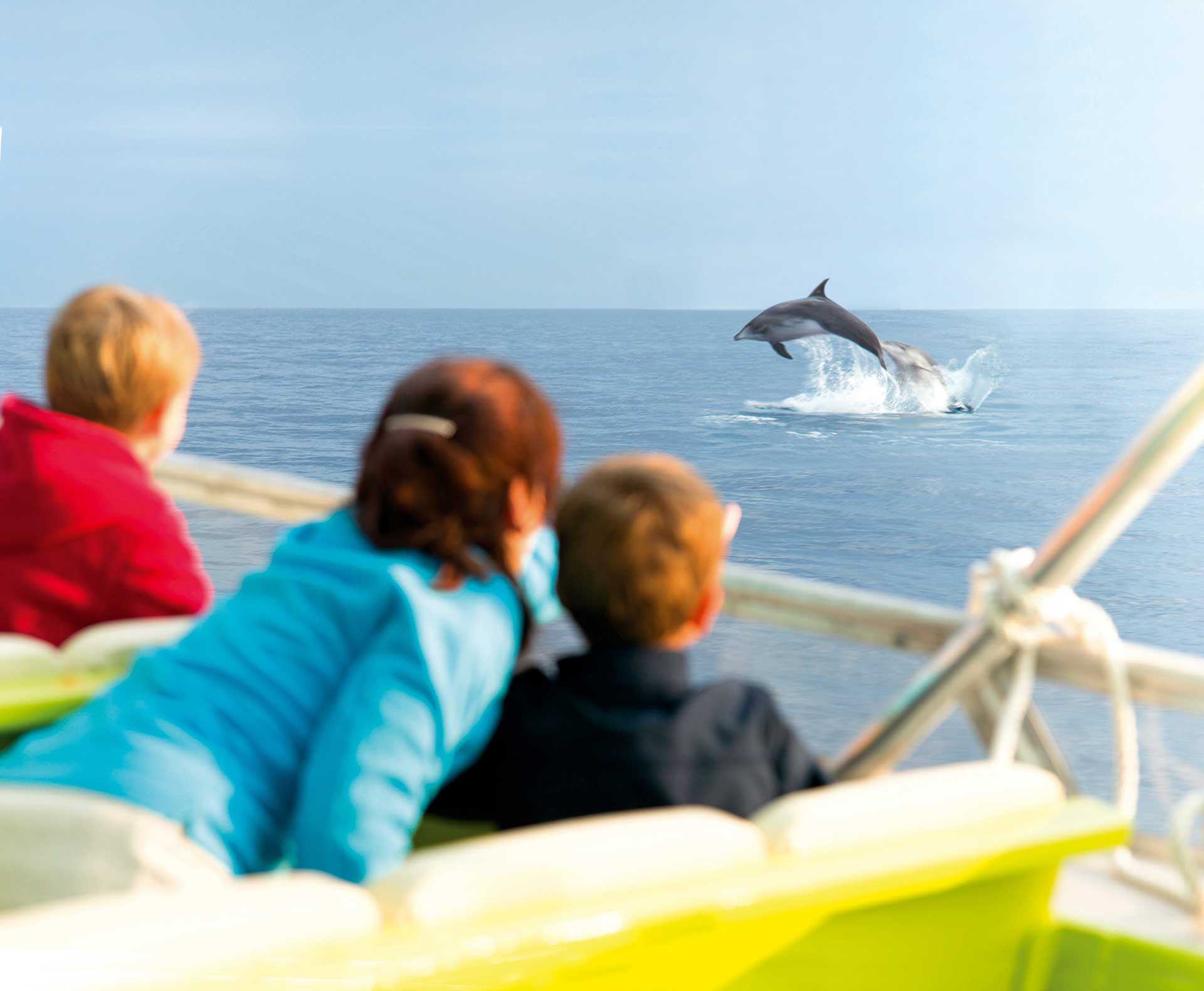 Witness the magic: Sunrise dolphin watching in Alcudia BayCheck availability →
 Catamaran Sunrise Dolphin Excursion from Cala RatjadaCheck availability →
The Cabrera channel, protected waters with heavy dolphin traffic
The Cabrera Archipelago Maritime-Terrestrial National Park, south of Mallorca, is one of the best-protected marine areas in Spain, and the channel separating it from the island is a regular migration route for dolphins. Departures from Portopetro, Cala Barca, Portocolom or Cala Marçal, on the east and southeast coast, take advantage of exactly that proximity: short crossings with good odds of a sighting even before entering the park's waters.
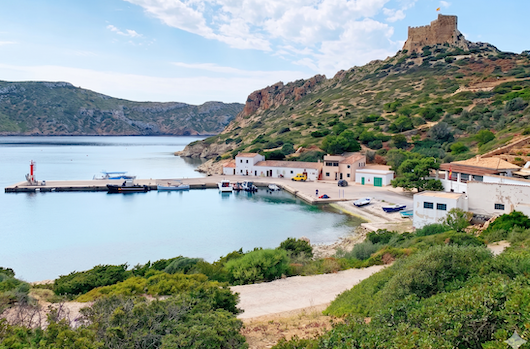 Visit to Cabrera Island by speedboat from Colonia Sant JordiCheck availability →
When to go: the best season and the best time of day
High season for dolphin watching in Mallorca runs from spring to early autumn, with the sea at its calmest and warmest between June and September, which is when the most dedicated excursions operate daily. Outside those dates the activity doesn't stop — bottlenose dolphins are present in Mallorca's waters year-round — but the number of departures on offer drops and depends more on sea conditions.
Which species you'll find
Several cetacean species share the waters of the Balearic Islands, though not all of them are equally easy to spot on a few-hour excursion. According to the official tourism website of the Balearic Islands, the species present in the area include:
- Bottlenose dolphin: the most common near the coast, the one that comes closest to boats and the star of most sightings.
- Striped dolphin: moves in large pods and tends to appear a bit further from the coast.
- Common dolphin: present in the area, with less frequent sightings than the bottlenose.
- Long-finned pilot whale, sperm whale and other whale species: occasional sightings, usually on longer trips out into open water.
Tips for a good (and respectful) sighting
- Book a dedicated dolphin-watching excursion, not a generic cruise that only mentions dolphins as a possibility.
- Choose a morning or sunrise time slot: calmer seas and more active animals.
- Bring sun protection, something warm — it gets cool out at sea even when it's hot on land — and a camera with a charged battery.
- Trust experienced skippers and guides: they know how to read dolphin behaviour and keep the right distance to avoid stressing them.
- Be patient: these are wild animals, not a scheduled show, so no excursion can guarantee a sighting one hundred percent of the time.